
Quality Control & Assurance for LED Luminaires
At MANI Lighting, quality is not an afterthought, it is designed, engineered, validated, and verified at every stage of production.
Engineering & R&D Control
Quality starts at the engineering level. Our R&D and engineering teams define product structures, electrical configurations, optical systems, and material specifications before mass production begins.
Optical Engineering
We design uniform, comfortable, and efficient light distribution tailored to real application needs, including glare control, beam consistency, and color stability.
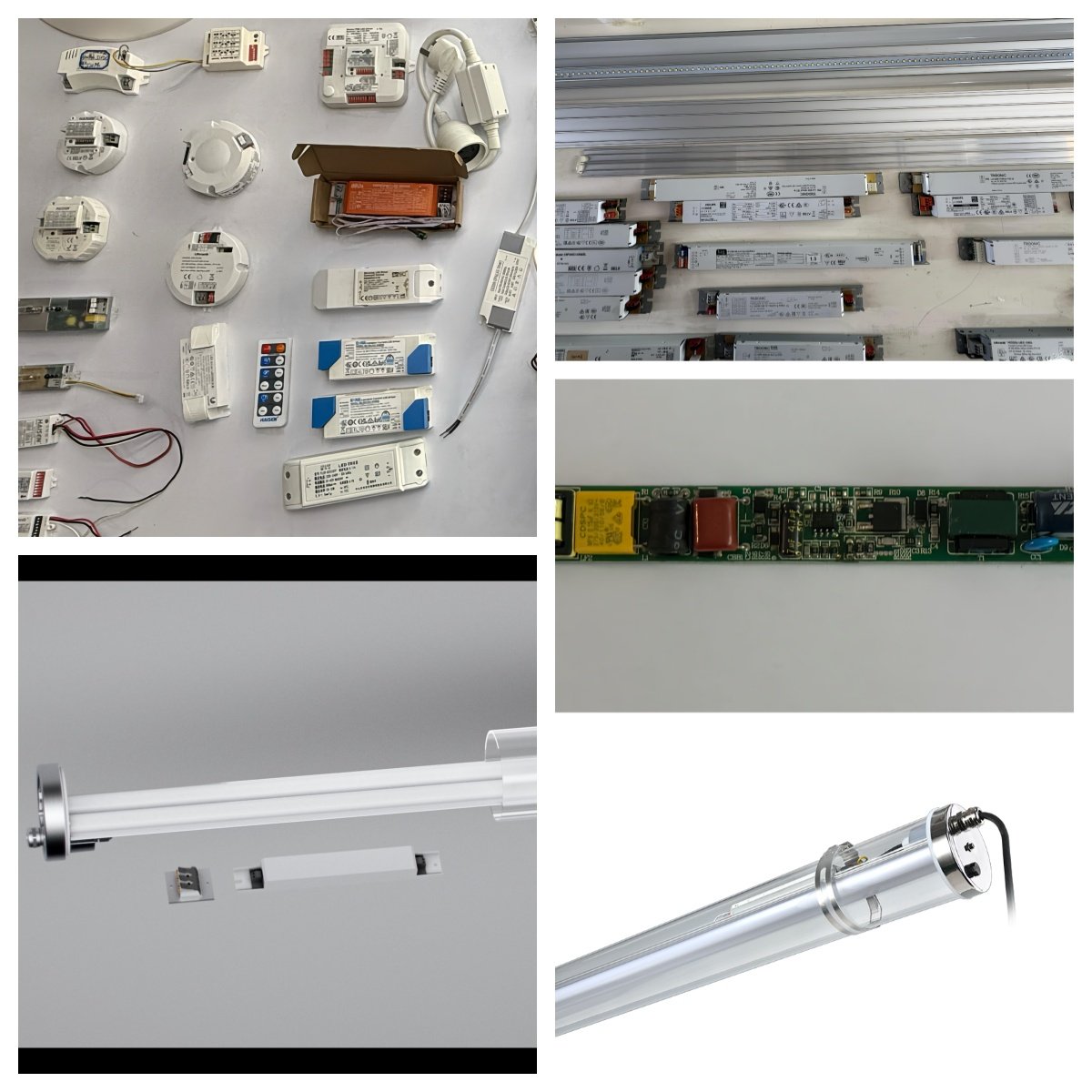
Electronics & Driver Integration
We integrate internationally recognized driver brands and support control systems such as ON/OFF, 1–10V, DALI/DALI-2, sensors, and emergency modules to ensure electrical stability and long-term reliability.
Structural Engineering
Mechanical structures are engineered with heat dissipation, waterproofing, impact resistance, and installation flexibility in mind. Modular construction supports OEM/ODM customization and serviceability.
Industrial & Aesthetic Design
Clean geometric forms and functional detailing are combined to balance industrial durability with architectural aesthetics, supporting both technical performance and visual consistency across projects.
Quality Control System & Batch Consistency
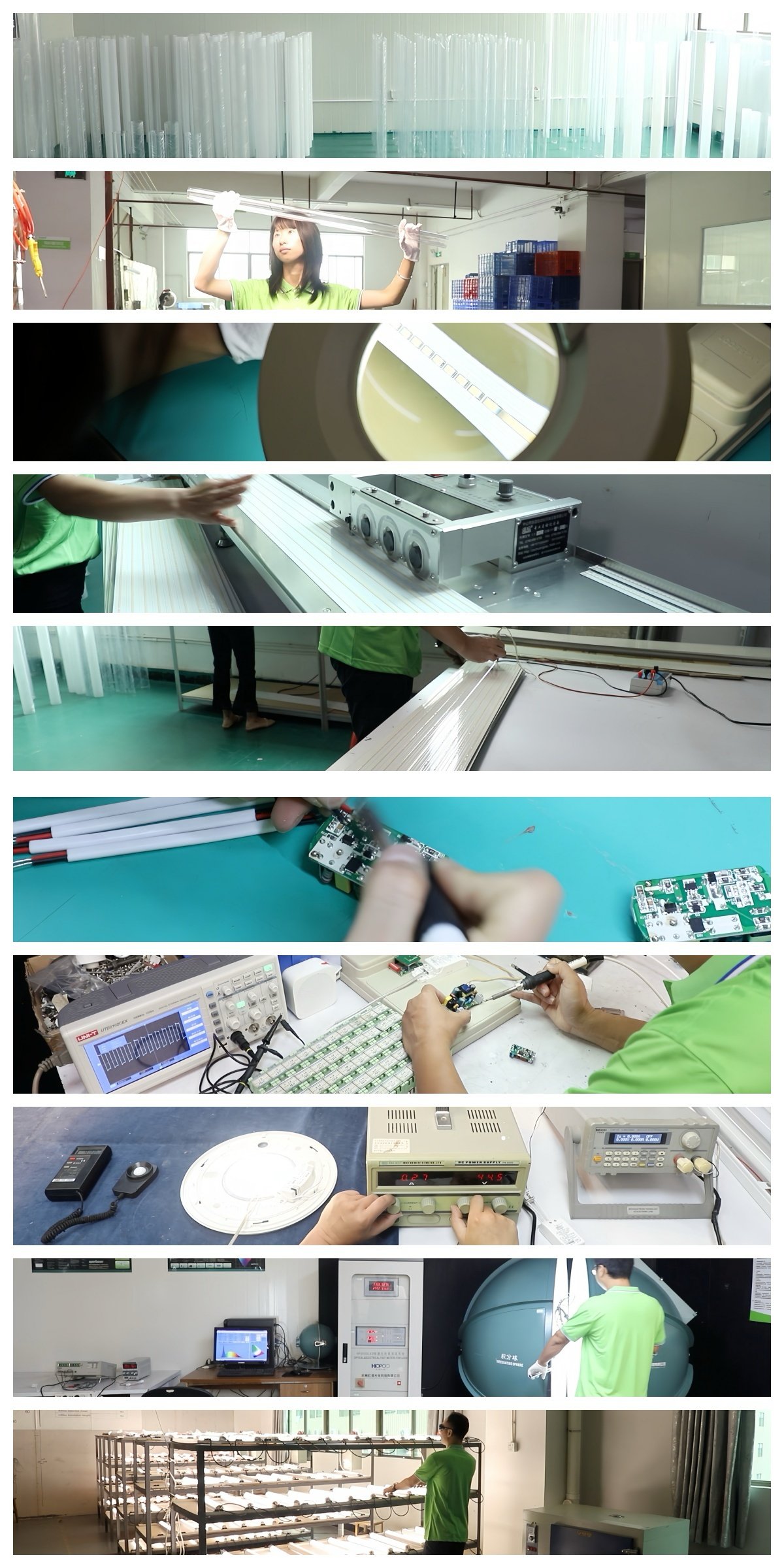
Our quality system follows a structured, multi-stage process to ensure consistency from raw materials to finished products.
Supplier Quality Control
Raw material and component suppliers are regularly audited and evaluated. Only certified materials and qualified components are authorized for use in production to ensure long-term quality consistency.
Incoming Quality Control (IQC)
Each batch of key components, including: LEDs and LED modules, drivers and electronic components, optical components and diffusers, PC / PMMA / glass tubes, ceiling lights housings and diffusers, structural parts, and mounting hardware, undergoes incoming inspection to verify conformity before assembly.
In-Process Quality Control (IPQC)
During assembly, QC teams monitor critical checkpoints, including:
- Soldering and wiring quality
- Mechanical torque and fixture alignment
- Optical and electrical stability
- Assembly compliance
100% Aging Test & Batch Consistency
Every MANI luminaire undergoes a mandatory 100% aging test before packaging.
Each unit is powered on under controlled conditions to verify:
Electrical stability
Thermal performance
Early failure risks
Final Quality Control (FQC)
Finished luminaires are inspected for:
Functional performance
IP and IK ratings (where applicable)
Beam quality and optical consistency
Installation fit and safety compliance
Only products that meet defined quality and performance criteria are approved for packaging and shipment.
All quality control records and inspection results are internally documented to support traceability and project accountability.
Reliability & Safety Testing
We conduct comprehensive reliability and safety testing to ensure long service life in demanding environments, including:
Waterproof testing (IP65–IP69K)
IK impact resistance testing
Thermal and surge protection tests
Glow Wire testing (up to 960°C)
High/low temperature cycling
Long-hour aging tests under controlled load conditions
These tests validate product durability, electrical safety and performance stability under real operating conditions.
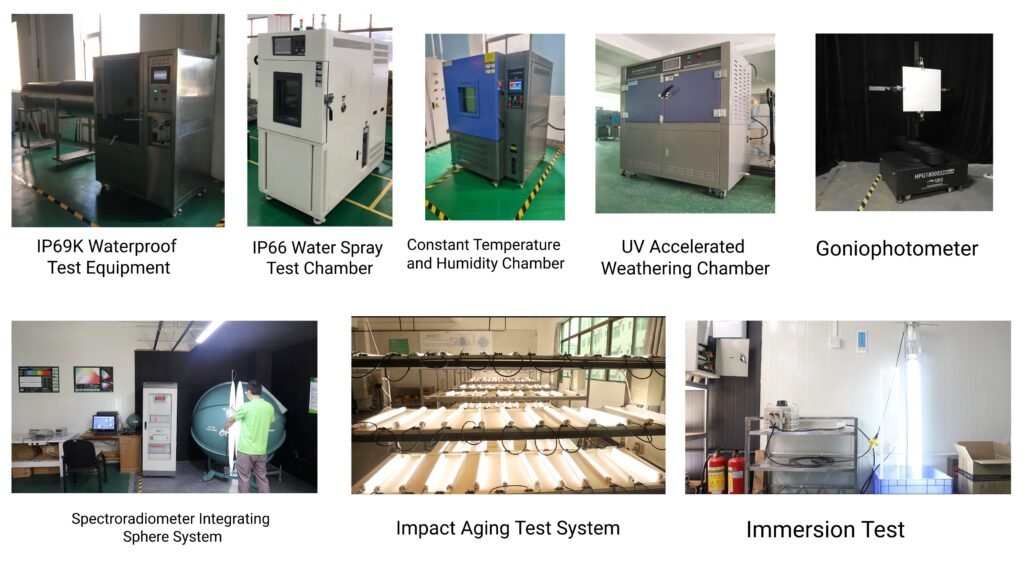
Testing Equipment & Validation Facilities
We utilize professional testing equipment to support engineering validation and quality assurance, including:
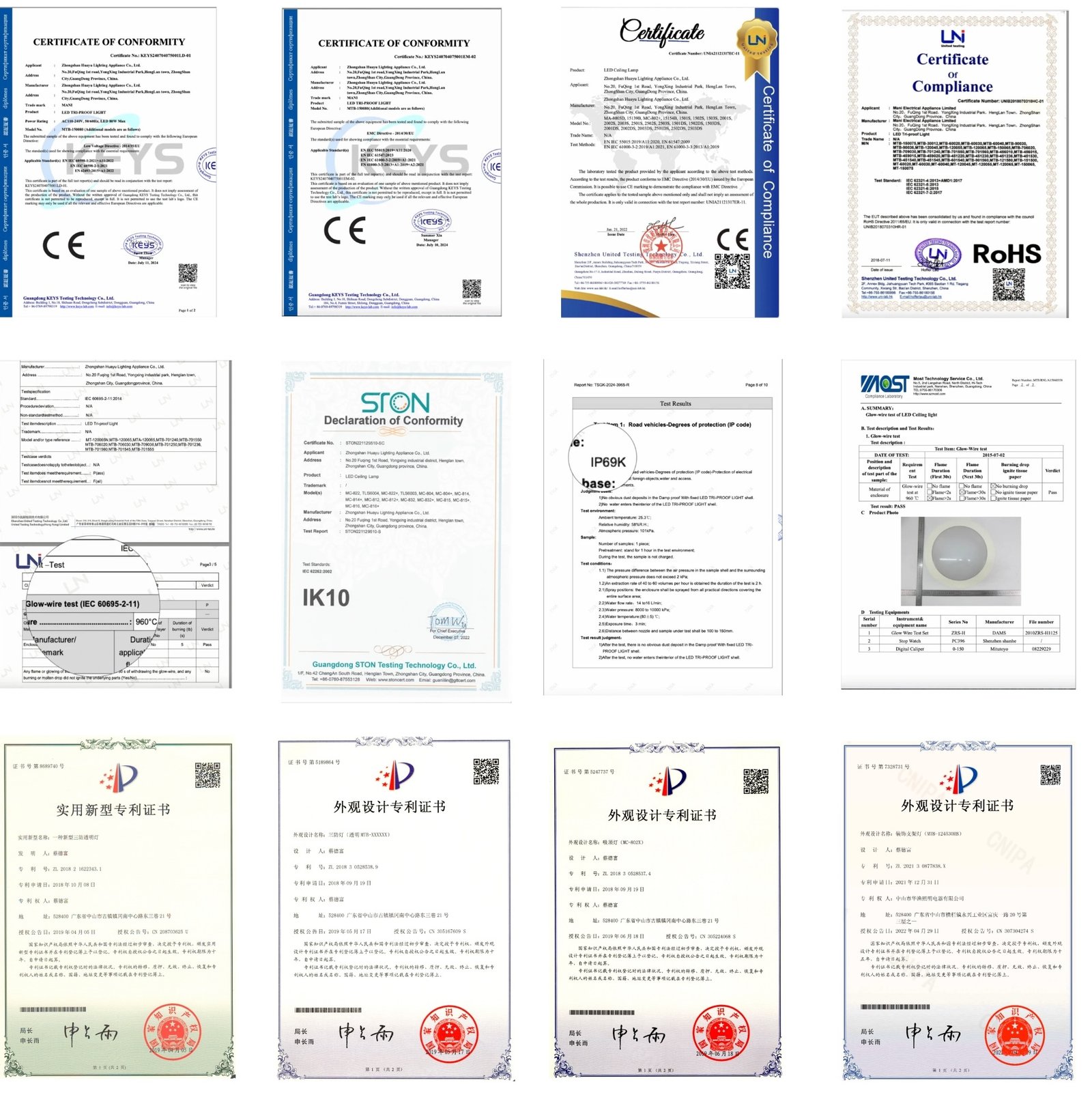
Certifications & Test Reports & Patents
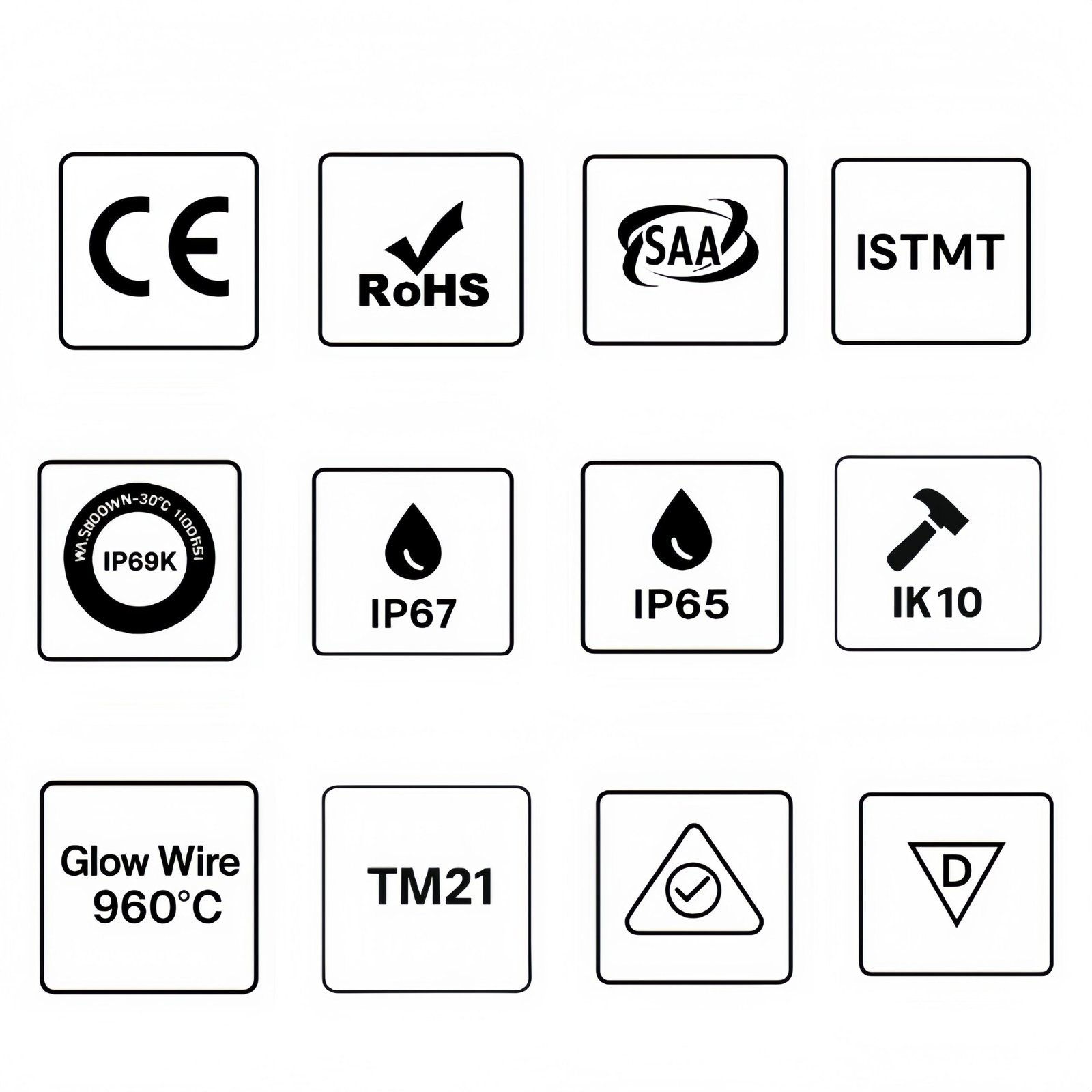
Certified to global standards, with full test reports and patented technologies.
Full test reports and compliance documentation are available to support project approval and tender requirements.
Key Component & Material Suppliers
Key components are sourced from internationally recognized suppliers and integrated under MANI’s validated engineering and quality control processes to ensure consistent performance across projects.

Brand names and trademarks are the property of their respective owners and are used for identification purposes only.
Quality Control & Assurance – FAQ
Yes.
Every MANI luminaire undergoes structured quality control at multiple stages, including incoming inspection, in-process control, final inspection, and 100% aging testing before packaging.
Quality checks are applied to all product categories, including architectural tubular, commercial tubular, industrial tubular, and ceiling lights.
Aging testing is applied to 100% of finished luminaires, not samples.
Each unit is powered on under controlled conditions to verify electrical stability, thermal performance, and early failure risks before shipment.
Quality control includes, but is not limited to:
Incoming material inspection (IQC)
In-process quality control during assembly (IPQC)
Functional and safety inspection (FQC)
Electrical, optical, and mechanical verification
Reliability and environmental testing (IP, IK, thermal, aging)
Testing scope may vary depending on product type and application requirements.
The quality framework is consistent, but testing focus is application-driven.
Industrial and waterproof luminaires emphasize durability, IP/IK ratings, and long-hour operation
Commercial and architectural luminaires emphasize optical quality, color stability, glare control, and appearance consistency
Each product is tested according to its intended environment and usage.
MANI implements batch-level traceability and consistency control, including:
Batch coding and production tracking
Material lot traceability
Sample-to-production consistency verification
Documented inspection and aging records
This ensures that approved samples accurately represent mass production.
Yes.
Quality inspection records, aging test results, and relevant test reports can be provided upon request, especially for project-based OEM/ODM orders.
Yes.
MANI products are designed and tested in accordance with applicable international standards.
Certification support may include CE, RoHS, and other region-specific requirements depending on the project.
Quality management is handled by dedicated engineering and QC teams.
Engineering defines the technical configuration and quality standards, while QC teams monitor execution throughout production to ensure alignment between design intent, approved samples, and final deliveries.
Yes.
For OEM/ODM projects, project-specific quality requirements can be defined, reviewed, and validated before mass production.
This includes customized inspection points, performance criteria, and documentation aligned with customer specifications.
Yes.
MANI supports third-party inspections and factory audits upon request, especially for large-scale or long-term projects.